CPA Webinar: Protecting Real Estate Clients from Hidden Financial Risks
What Accountants Will Get Out of It
By attending, accountants will:
- Identify red flags that signal growing risk in real estate portfolios
- Understand what to look for in clients who have outgrown their current tracking system
- See how better visibility improves reporting, compliance, and advisory conversations
- Understand when it’s time to introduce a purpose-built solution
Set the Stakes (5 minutes)
Real estate clients are getting more complex—and accountants are the first to feel it.
Cover:
- Increasing entity counts
- Investor reporting pressure
- Debt and compliance complexity
- Why “we’ll fix it later” doesn’t work
The Red Flags Accountants Should Never Ignore (15–20 minutes)
A. Structural & Entity Chaos
- No single view of properties, entities, owners
- Partners don’t understand what they own
- Constant cleanup requests during tax season
Demo bridge:
“This is usually where spreadsheets multiply—and visibility disappears.”
B. Debt & Capital Stack Blind Spots
- Loans tracked outside accounting systems
- Refinances missing or unclear
- Difficulty answering lender or investor questions
Demo bridge:
“If it takes hours to answer simple financing questions, there’s a system problem.”
C. Reporting Breakdowns
- Inconsistent property-level reporting
- Custom reports recreated repeatedly
- Clients asking for insights accountants can’t easily deliver
Demo bridge:
“At this point, accounting data exists—but it’s not usable.”
Why Traditional Accounting Tools Stop Working (Key Transition)
This is where demos naturally belong.
Explain:
- Accounting systems are not designed for portfolio-level real estate management
- They don’t handle:
- Entity relationships
- Ownership structures
- Debt-to-asset mapping
- Long-term historical visibility
Reframe the problem:
“It’s not bad accounting—it’s the wrong tool for the job.”
What “Good” Looks Like (Live STRATAFOLIO Demo – 5 minutes)
Show how firms:
- See all entities, properties, and ownership in one place
- Track debt and capital cleanly
- Support advisory conversations with confidence
- Reduce cleanup work and client confusion
Narrative:
“Here’s how accounting firms regain control and clarity.”
How Firms Use This to Win More Advisory Work (5 minutes)
Highlight:
- Stronger client conversations
- Proactive guidance instead of reactive cleanup
- Differentiation from other accounting firms
- Better client retention
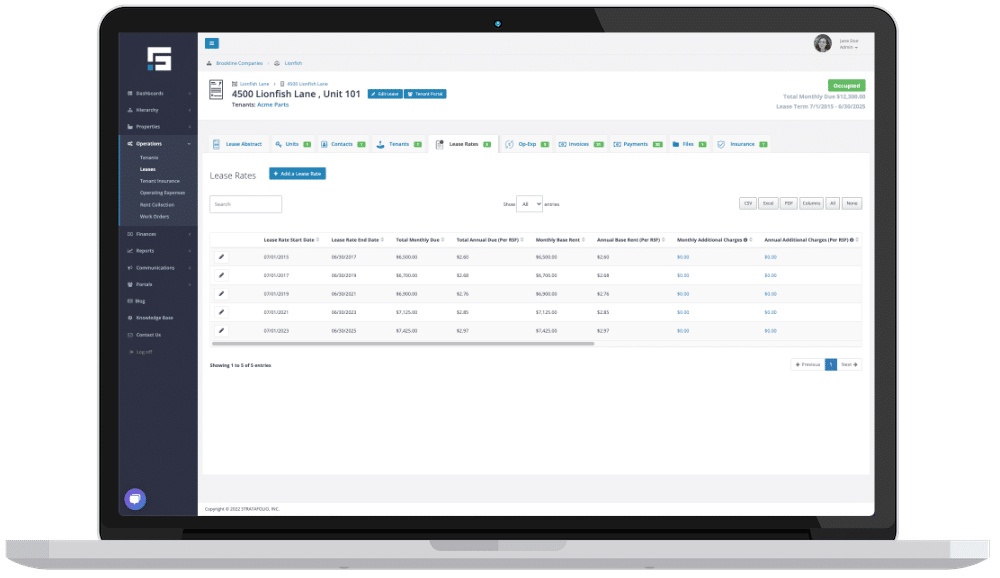
If you’re seeing these issues in your clients, we’ll walk through your real-world scenarios in a personalized demo.
The Top 10 Tax-Time Red Flags in Real Estate Clients
“We’ll Get You That Later” Financials
What you hear:
“We’re still waiting on a few numbers.”
Why it matters:
Late, incomplete, or constantly revised data usually means:
- Poor internal controls
- No real-time visibility
- Heavy spreadsheet dependency
Future issue:
Audit risk, lender issues, missed opportunities—and massive cleanup work.
Too Many Entities With No Clear Purpose
What you see:
- Dozens of LLCs
- Inconsistent ownership percentages
- Entities formed “just in case”
Why it matters:
Entity sprawl without structure increases:
- Reporting errors
- Compliance risk
- Partner disputes
Future issue:
Clients won’t understand their own portfolios—and neither will new advisors.
Depreciation Schedules That Don’t Match Reality
What you see:
- Assets still depreciating after sale
- Inconsistent methods across properties
- Missing component detail
Why it matters:
Depreciation errors compound over time.
Future issue:
IRS exposure, missed cost segregation, and inaccurate tax planning.
Debt That Lives Outside the Accounting System
What you hear:
“The loan details are in a spreadsheet.”
Why it matters:
If debt isn’t tied to:
- Properties
- Entities
- Guarantees
…it’s not being managed—only recorded.
Future issue:
Refinance confusion, lender reporting failures, and bad capital decisions.
Capital Contributions & Distributions That Are Hard to Explain
What you see:
- Partner loans that “sort of” exist
- Capital accounts that don’t tell a story
- Manual equity tracking
Why it matters:
Capital confusion is the #1 trigger for partner disputes.
Future issue:
Legal exposure, investor dissatisfaction, and expensive reconciliations.
“Can You Break This Out by Property?”
What you hear at tax time:
“We need property-level numbers… by next week.”
Why it matters:
If property-level reporting isn’t readily available:
- The client lacks operational insight
- Accounting is reactive
Future issue:
Inability to scale, poor decision-making, and advisor fatigue.
Ownership Changes That Weren’t Properly Tracked
What you discover:
- Buy-ins, buyouts, or partner exits mid-year
- Ownership changes not reflected everywhere
Why it matters:
Ownership errors affect:
- Allocations
- Basis
- Compliance
Future issue:
Disputes, amended returns, and audit risk.
Heavy Reliance on One Person’s Knowledge
What you notice:
“Only Jim knows how this works.”
Why it matters:
If portfolio knowledge lives in one person’s head:
- There’s no continuity
- No documentation
- No scalability
Future issue:
Key-person risk, operational collapse, and advisor liability.
No Clear History of Properties Over Time
What’s missing:
- When assets were acquired
- When refinances happened
- How entities evolved
Why it matters:
Real estate decisions are cumulative.
Future issue:
Poor long-term planning and inability to support audits, sales, or estate planning.
Clients Asking Questions Accounting Systems Can’t Answer
What you hear:
- “How leveraged are we really?”
- “Which properties are underperforming?”
- “What do we actually own today?”
Why it matters:
When systems can’t answer basic questions, confidence erodes.
Future issue:
Clients seek answers elsewhere—and advisors lose strategic relevance.
ABOUT THE SPEAKER
Jeri Frank, Co-Founder and CEO of STRATAFOLIO
Jeri Frank, along with co-founder Uriel Barillas, founded STRATAFOLIO when, as a real estate investor herself, dealt with the frustrations of having to manage her portfolio on spreadsheets and QuickBooks alone. What began as an aha moment has turned into a successful commercial property management software company with more than 2Billion in assets managed today.
Jeri is a long-time Forbes contributor, a 4+ year Forbes Business Council member, National Association of Realtors REACH member and more.

Want to talk to an expert?
Learn how you can keep using QuickBooks and save over 80% of manual effort when using STRATAFOLIO to manage your operations, global finances, assets, and investors. Utilize our two-way connection with QuickBooks to gain one fully integrated system.