When a property or organization changes ownership or is deactivated, STRATAFOLIO helps you manage this transition seamlessly while maintaining data integrity and compliance across your portfolio. This guide shows you how to handle a sold asset.
How to Handle a Sold Asset
When marking an asset as sold, STRATAFOLIO adds enhanced safeguards and visual indicators to ensure accuracy and clarity in the process.
When a user marks an asset as sold and selects Save, a confirmation pop-up appears outlining the implications before finalizing the sale.
Important Implications of Selling an Asset
Once you confirm the sale:
- Tenant Access Restrictions
- Tenants lose access to the leases associated with the sold asset.
- If the tenant also leases units in other assets, they will retain access to those only.
- Autopay Disconnection
- STRATAFOLIO automatically disconnects all active Autopay arrangements tied to that asset.
- STRATAFOLIO automatically disconnects all active Autopay arrangements tied to that asset.
- Alert Suspension
- STRATAFOLIO automatically stops all asset-related alerts and reminders for that property.
- STRATAFOLIO automatically stops all asset-related alerts and reminders for that property.
- Read-Only Mode for Related Data
- All associated records (Loans, Buildings, Units, Leases, etc.) become read-only for historical reference and audit purposes.
Automated Actions
- STRATAFOLIO automatically disconnects all QuickBooks integrations linked to the canceled organization.
- STRATAFOLIO automatically cancels all active Autopay setups to prevent further billing.
Best Practices
Always verify the sale date and ensure any open invoices or reconciliations are completed before marking the asset as sold.
At STRATAFOLIO, we know that buying and selling properties is part of a healthy commercial real estate portfolio. Our software allows you the flexibility to close out a lease and mark a property as sold in just a couple of steps.
Easy-to-follow steps
- Mark the Asset as Sold – Enter the sale date and sale price for the Asset.
- Close Leases – Closeout any leases associated with the sold Asset.
With STRATAFOLIO you do not need to DELETE the asset from your portfolio. In fact, we strongly recommend that you do not delete the information. Instead, by following the steps above, the asset will no longer be included in your rent roll, but it will remain in STRATAFOLIO as historical information.
Mark An Asset as Sold
To mark an Asset as sold, you will need to Edit the Asset details in STRATAFOLIO.
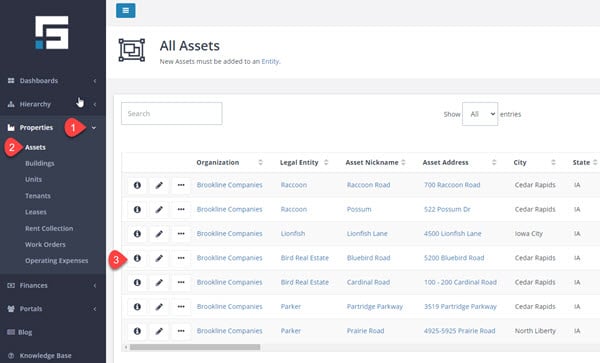
1. Navigate to the Asset Details page.
In the left-hand navigation panel, navigate to the drop-down arrow next to Properties, then select Assets, and select the 
2. Edit Asset
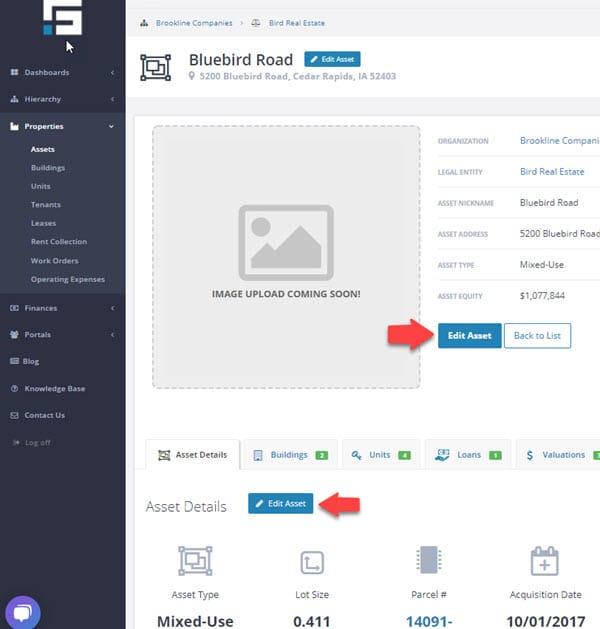
On the Asset information page, choose the Edit Asset button so you can edit the details on the Asset.
3. Enter Sale Date & Sale Price
Once you are into Edit Asset Details, scroll down to the bottom to find a section where you can enter the Sale Date and Sale Price. Then Save Changes.
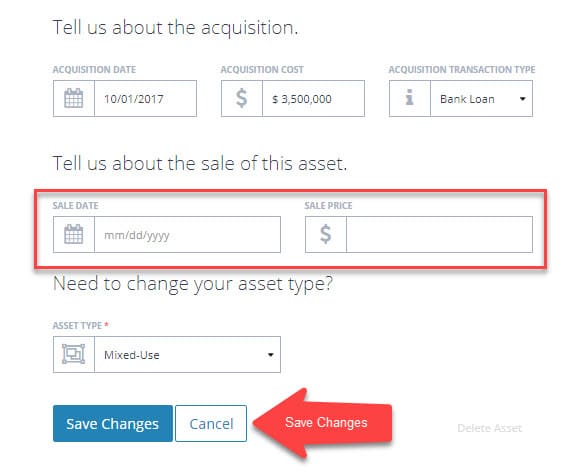
To finish removing the Asset information from STRATAFOLIO, you must also close the Leases associated with the Asset that was sold. (See below.)
Close Leases
To close out the leases, you should do the following for each lease associated with the sold property:
- Mark all the leases associated with the sold property as Expired.
Expiring a lease ensures that it will no longer show up in the rent roll. - Enter the amount of Security Deposit that was refunded.
Security Deposits are a financial liability. When you enter the Final Inspection Charges and the Refunded Security Deposit in STRATAFOLIO, you are clearing that liability from your STRATAFOLIO financial portfolio. (Note, any transactions should also be recorded in your accounting software.) - Review the Lease Closing Notes and add in any notations you need for the future. We suggest entering a note that the asset was sold so you have a historical record of the reason and activity.
For additional information, read: How to Close Out Expired Leases in STRATAFOLIO.
Would you like to learn more about what STRATAFOLIO can do to help you manage Assets and Leases for your Commercial Real Estate Properties? Contact us for a demo, we’d love to show you all that STRATAFOLIO has to offer!
Do I Still Get Alerts From My Sold Asset?
No. Once an asset is marked as sold in STRATAFOLIO, all alerts specifically associated with the sold asset will automatically stop. This means that beginning on the date the asset is sold, and on any day after, you will no longer receive notifications related to that asset. However, you will continue to receive alerts for all your other active assets and any alerts that are not linked to the sold asset as long as your subscription is active. This ensures that your notifications remain accurate and relevant, without unnecessary alerts for properties you no longer own.
| Alert Name | Alert Description |
|---|---|
| Lease Renewal Alert | Get notified when a lease is approaching its expiration, based on the configured alert settings. |
| Lease Rate Expiring and Unconfirmed Alert | Get notified when an unconfirmed lease rate is scheduled to take effect within the next 30 days. |
| Lease Rate Expiring and Confirmed Alert | Get notified when a confirmed lease rate is scheduled to take effect within the next 30 days. |
| Loan Maturity Alert | Get notified when a loan is nearing its maturity date. |
| Expiring Insurance Policy Alert | Get notified when an insurance policy in STRATAFOLIO is about to expire. |
| Tenant Expiring Insurance Policy Alert | Notifies tenants when their insurance policy is about to expire. |
| Insurance Agent Expiring Insurance Policy Alert | Notifies the insurance agent on file when a policy is about to expire. |
| Operating Expense Period Alert | Get notified when a lease does not have a new operating expense period and the current period is nearing expiration. |