
As a real estate investor, you probably enjoy buying, selling, or developing properties. The excitement of these things often outweighs the mundane tasks, like making sure you have a good system for commercial real estate accounting.
However, if you really think about it, your bookkeeping process can make or break your real estate success. A few small mistakes or an overlooked expense can be catastrophic. Without an accurate picture of the money going in, the money going out, and data trends over time, you could be in big trouble. No matter how tedious it may be, good bookkeeping is essential to the success of your business.
Following Best Practices for Commercial Real Estate Accounting
Whether you’re handling your own bookkeeping or outsourcing it, the best practices remain the same. This is true no matter the size of your real estate company. Don’t let your accounting system get in the way of meeting your goals! Here’s what you need to keep in mind when developing a commercial real estate accounting system.
Understand the laws and regulations
State and federal governments mandate specified accounting standards. The Financial Accounting Standards Board, or FASB, sets these standards. Maintaining accuracy when reporting your income is very important, as the IRS will scrutinize it. If you fail to comply with regulations, your business could face legal prosecution.
Use a good accounting software
A robust accounting software like QuickBooks is the ideal choice for your real estate business. Cloud-based software like QuickBooks Online lets you access your financial information anywhere. Plus, it allows you to easily share data with the rest of the team. Ensure accurate bookkeeping by recording each and every financial transaction in the same place.
Know the five elements of accounting
Assets, equity, liability, expenses, and income are the five basic elements of accounting. You must be sure to include each of these in your reporting and recording in order to get a full picture of your accounts and finances. You can learn more about the five elements of accounting in this Accountingverse article.
Be aware of taxes
To ensure accuracy and to take advantage of tax savings, you need to keep track of the various taxes you’re responsible for. With careful accounting, you could benefit from several tax advantages. Benefits include deductions for depreciation, maintenance, upkeep and more.
Have a system for organizing your documents
File all your documents – lease agreements, invoices, etc. – in one central location. This makes it easy to double-check for accuracy and ensure that every financial transaction is being properly recorded. Within STRATAFOLIO, we offer the ability to upload and store files in a secure, organized location.
Review performance metrics regularly
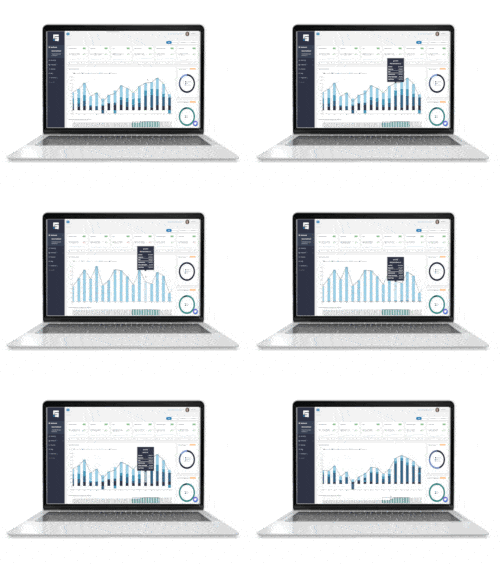
To get the most out of your accurate and thorough accounting system, you should regularly review your performance metrics. This allows you to estimate cash flow, monitor the performance of individual properties, view your financial performance over time, and make better financial decisions.
Combine QuickBooks with STRATAFOLIO for best results
Accounting is an integral part of your commercial real estate business. Combine QuickBooks with STRATAFOLIO’s advanced operations management and analytics tools, and you’ll be able to gauge the progress of your business at a glance and make better business decisions. Get in touch today to learn more with a free one-on-one consultation.